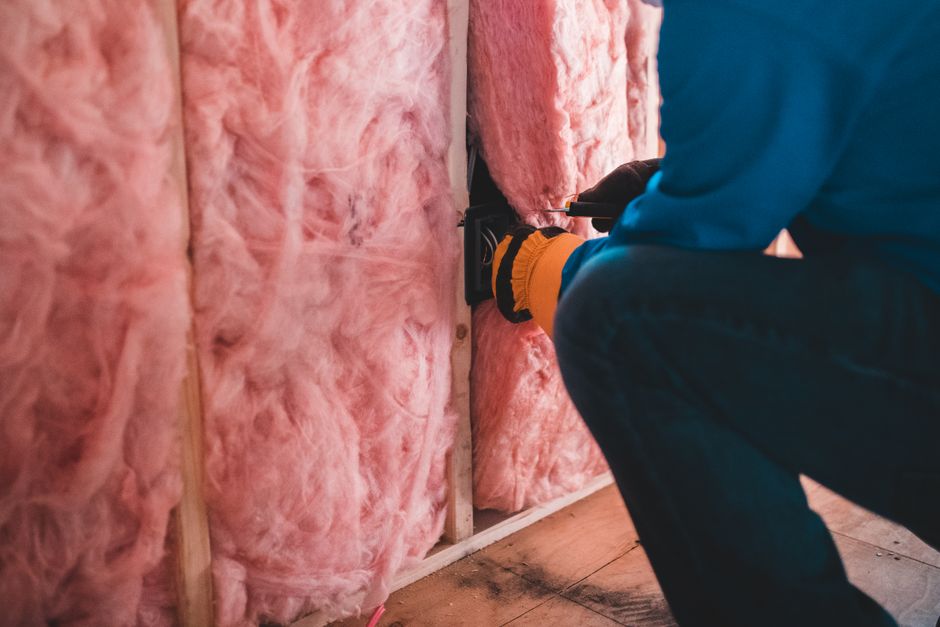
I once walked into an attic that had been sprayed with closed cell foam a few months earlier, and the first thing I noticed was the heat. In a properly insulated spray foam attic, the temperature should sit close to the temperature of the house below it. This one felt like a sauna. When I pulled back sections to check the thickness, it ranged from bare roof deck in some spots to nine inches in others. The average thickness probably looked fine on the invoice. It meant nothing, because heat pours through the thin patches no matter how thick the good sections are.
That attic taught me something I now tell every client who asks me about insulation. The material is rarely the problem. The person holding the spray gun is.
What Installers Actually Get Wrong
Spray foam does two jobs at once. It insulates and it forms the air barrier, and because both jobs come from the same material, there is no separate step where a crew has to line up insulation with an air barrier the way you do with fiberglass or cellulose. That sounds like an advantage, and it is, right up until the installer makes a mistake, because now the same mistake affects both systems at once.
Foam That Never Got Thick Enough
Closed cell foam has a higher R value per inch, so installers typically spray about two inches in walls and three inches in rooflines to reach an R value of 13 in the walls and 19 in the roof. Open cell foam usually fills the whole framing cavity, so it is easy to see if the crew shorted you. Closed cell does not fill the cavity, so you have to check in multiple spots to know if you got what you paid for. That attic I described above was a first time job for the installer, and the homeowner had no way to know the coverage was uneven until someone else climbed up there with a flashlight.
Sealed Everywhere Except Where It Mattered
I got a call once about a house with spray foam throughout that had a strange problem in its first summer. The owners walked me to the master suite, where they had towels on the floor catching what looked like rain falling from the ceiling supply registers. The installers had missed spots at the soffit above that room, and gaps around the tray ceiling let humid attic air find the cold surface of the ductwork, where it condensed and dripped straight down. One of spray foam's best selling points is that it air seals as it insulates, but it cannot seal anywhere it never touched.
Foam In The Wrong Place Entirely
In complex houses, finding the actual boundary of the building enclosure is not always obvious, and installers sometimes spray extra foam in places that have conditioned space on both sides of a wall. The homeowner pays for material that does nothing, because there was never a temperature difference for it to manage. Getting this boundary wrong in the other direction is worse. Skip a section of the real enclosure and you get both an air leak and a cold spot, because that part of the house was never actually insulated at all.
Foam That Pulls Away From The Framing
Closed cell foam can contract and separate from studs and rafters if it cures too hot. One installer I later spoke with explained that when the hose idles, the foam inside it overheats, and once it is sprayed at that temperature it cures before it ever bonds to the wood. A little bit of separation adds up to real wasted energy across a whole house, and unlike a thin patch you can see with a flashlight, this kind of failure hides behind the foam itself until someone opens the wall.
The Air Barrier Has To Touch The Insulation
This is not only a spray foam problem. I checked a floor once where two by eight joists gave a cavity depth of about seven and a quarter inches, and the fiberglass batts stuffed into that cavity were maybe two inches thick, rated at all of R 7. They did not come close to touching the subfloor above them, which was the actual air barrier in that assembly. Insulation that does not stop air movement and does not touch the air barrier lets air move through or around it freely, and at that point the batts are doing almost nothing. I have seen the same misalignment problem in a brand new house, so this is not a symptom of old construction. It is a symptom of nobody checking that the two systems, insulation and air barrier, actually meet.
When A Tighter House Traps What It Used To Vent Out
The Night The Walls Frosted
An energy auditor I know shared photos of frost forming on interior walls and ceiling in a house during a cold snap. Outdoor temperature was five degrees below zero. Indoors it was 66 degrees at 49 percent relative humidity, which put the dew point at 46 degrees. The frosted sections of that ceiling were below 32 degrees, well under the dew point, so moisture in the room air was condensing and freezing directly onto the drywall. Two things had gone wrong together. In the attic above, a board and some wiring kept the insulation from sitting flush against the ceiling drywall, and an open ventilation baffle let cold wind blow in right under that gap. At the same time, the home ran a humidifier around the clock for a household of ten, keeping indoor humidity higher than a house with an imperfect enclosure could tolerate in that kind of cold. In winter, it is safer to keep relative humidity closer to 30 percent than 50 percent unless your enclosure is in excellent shape, because moisture problems most often show up inside walls, where the interior drywall stays too warm to pull water vapor out of the air, and that vapor keeps traveling until it hits the cold exterior sheathing and condenses there instead.
The Latent Load Problem
A homeowner in Nashville posted about a stranger version of the same issue. After having the attic air sealed and filled with blown cellulose, indoor humidity climbed from a range of 45 to 48 percent up to 52 to 56 percent, even though the previous summer had been hotter and more humid outside. The explanation had nothing to do with the insulation material itself. Air sealing knee walls and adding insulation lowers the heat gain into the house, so the air conditioner runs less. Less runtime means less moisture pulled out of the air, because a big share of what an air conditioner removes is latent load, not just temperature. The fix in that case was not to undo the insulation work. It was to run the system's dry cooling mode more often or add a standalone dehumidifier, since a tighter, better insulated house can leave you with a home that no longer dehumidifies itself the way the old leaky one did by accident.
The Chemistry Nobody Puts On The Brochure
Isocyanates And A Cure That Does Not Always Finish
Spray polyurethane foam contains reactive chemical components called isocyanates, which are known respiratory sensitizers linked to skin irritation, asthma, and chronic respiratory problems. When foam is mixed and cured correctly, it becomes an inert material that should not keep releasing anything harmful. That is the promise on every installer's website, and for most homes it holds up. But improper mixing or incomplete curing can lead to prolonged offgassing well beyond the day the crew packs up, and even properly cured foam can still emit volatile organic compounds, including formaldehyde. Indoor VOC concentrations in a home can run two to five times higher than outdoor air, and in some documented cases more than a hundred times higher, which is a much bigger range than most people picture when they hear the word offgassing. One person who developed a serious chemical sensitivity while building what they called an ultra green house, complete with closed cell foam, described it this way: any exposure to the indoor air brought on neurological symptoms they had never had before, and they eventually had to move out.
What This Has Done To Resale
In Vermont, homeowners with improperly installed or degrading spray foam have faced indoor air quality problems severe enough to force them out of their houses, with remediation costs in some cases exceeding fifty thousand dollars, plus reduced resale value once buyers and inspectors got wary of the material. The financial fallout has reached further than individual houses. Close to a quarter of mortgage lenders in the United Kingdom now decline financing for homes with spray foam insulation, affecting an estimated 250,000 properties there. Closed cell foam's other property, blocking the movement of water vapor through a wall or roof assembly, is exactly what makes it good at stopping bulk moisture and exactly what can trap moisture that gets in anyway, leading to hidden decay in the wood behind it long before anyone notices.
Where This Leaves Me
None of this means insulation upgrades are a bad idea. A well installed spray foam attic still outperforms a typical fiberglass batt attic, and I have inspected plenty of homes where foam has done exactly what it was supposed to do for years without complaint. What I have stopped doing is treating the material and the installation as the same question. They are not. A great product installed by someone rushing through their first job can leave you with a hot attic, a dripping ceiling, or air quality worse than what you started with, and none of that shows up on the invoice.
Here is what I actually check before I trust a job, whether it is spray foam, cellulose, or batts:
- Spot check thickness in several places, not just one, especially with closed cell foam where an even average can hide bare patches.
- Confirm the installer can point to where the building enclosure actually is, not just where they decided to spray.
- Run a blower door test after the work is done, before drywall goes up if you can manage it, to catch missed air leaks while they are still easy to fix.
- Check that insulation actually touches its air barrier, since a gap renders even good material almost useless.
- Put a thermo hygrometer in the attic or crawlspace afterward and watch relative humidity for the first year, because a tighter house can trap moisture a leaky one used to vent out by accident.
- Ask what curing conditions the crew used and whether any batch problems were reported, especially if you notice foam pulling away from framing later on.